
The manosphere - a diverse ecosystem of anti-feminist and male supremacist online communities, influencers, and platforms - has emerged over the past decade as a significant site of gendered harm. From men’s rights activist (MRA) networks and incel forums to “red pill” influencers and anti-feminist social media channels, these online environments shape how some men and boys understand masculinity, relationships, and gender relations.
Growing up
In 2019, a clip of Miami Dolphins Linebacker Jerome Baker went viral.
In this clip, he’s searching for his mother in the stands of his football game, repeatedly asking “Where is my mama?” as he scans the crowd.
Exposure to and use of pornography is routine among young men. Males are more likely than females to intentionally use pornography, to do so regularly, and to first view it at a young age (Crabbe et al., 2024; eSafety Commissioner, 2023). In an Australian study of 15–29-year-olds, 100% of males and 82% of females reported ever viewing pornography (Lim et al., 2017). In another study among young people aged 15-20, over four-fifths (86%) of young men and over two-thirds (69%) of young women had seen pornography.
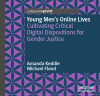
This new book:
- Explores young men’s online lives in the context of growing concerns about gender-based digital harms
- Offers nuanced insight into the complexities and tensions of young men’s positive and negative experiences online
- Proposes a framework for developing young men’s critical digital dispositions for gender-just online engagement
By Professor Amanda Keddie and Professor Michael Flood

ASK A MATE is a new app aimed at boys and young men and intended to provide sound, evidence-based advice on topics including relationships, gender, consent, domestic and sexual violence, delivered by high-profile positive male role models who young men are willing to listen to.
ASK A MATE has been created by Beyond DV, an Australian charity focused on shaping a society free from domestic violence.
There is intensified attention in Australia at present to the messages about manhood, good and bad, that boys and young men grow up with.
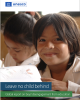
This report provides an overview on the global situation on boys’ disengagement from and disadvantage in education.
To leave no child behind, UNESCO developed the first global report of this scope on boys’ disengagement from education, bringing together qualitative and quantitative evidence from over 140 countries. This report provides an overview on the global situation on boys’ disengagement from and disadvantage in education. It identifies factors influencing boys’ participation, progression and learning outcomes in education.
Traditional models of how to be a man face growing criticism in the twenty-first century, with increasing attention to the harms they cause among men, women, and communities. Social norms regarding manhood are diverse across cultures, history, and within any one society. But one version of manhood increasingly is seen as a problem, the version in which men are expected always to be tough, aggressive, risk-taking, stoic, heterosexual, homophobic and transphobic, emotionally inexpressive, hostile to femininity, and dominant.
This report takes stock of educational underachievement among boys and men, examines the evidence on contributing factors, and explores what has been done to address the phenomenon. While female underrepresentation in secondary and tertiary education remain a significant issue in some, particularly low-income, countries, more than 100 countries have lower levels of male secondary and tertiary education enrollment and completion.
I want to start with the rationale for this work. Why are we trying to promote healthy masculinities? What is the problem?
To answer that, I have to start with gender.
Gender means…
I’m using the term ‘gender’ here for the patterns of men’s and women’s lives, boys’ and girls’ lives.
Gender means: the meanings we give to being male and female, and the social organisation of men’s and women’s lives.