
Violence
The US organisation Demand Abolition is circulating a request for proposals to address men’s and boys’ demand for commercial sex.
The text of Demand Abolition’s invitation is as follows. Please also see the two attachments.
Request for Proposal: Movement Building through the Engagement of Men and Boys to End Sexual Exploitation.
CALL FOR PAPERS & ARTWORK
Special issue on Men, Masculinities, and Violence
Graduate Journal of Social Science
How can we effectively engage men in preventing men’s violence against women? How can we mobilise their commitment and activism? The following guides and manuals provide useful guidance on the practicalities of this work. See below for PDF copies of most of these. Also see further below for other resources.
Last week’s International Conference on Masculinities was the latest in a string of international events on engaging men and boys for gender equality.
In this 10-minute speech at the Melbourne Town Hall, Dr Michael Flood had four messages: (1) We know a fair amount about the problem – about men’s violence against women. (2) Men are now part of the solution. (3) We face real challenges. (4) It’s time for a fresh approach.
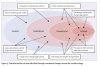
Violence perpetrated by and against men and boys is a major public health problem. Although individual men’s use of violence differs, engagement of all men and boys in action to prevent violence against women and girls is essential. We discuss why this engagement approach is theoretically important and how prevention interventions have developed from treating men simply as perpetrators of violence against women and girls or as allies of women in its prevention, to approaches that seek to transform the relations, social norms, and systems that sustain gender inequality and violence. We review evidence of intervention effectiveness in the reduction of violence or its risk factors, features commonly seen in more effective interventions, and how strong evidence-based interventions can be developed with more robust use of theory. Future interventions should emphasise work with both men and boys and women and girls to change social norms on gender relations, and need to appropriately accommodate the differences between men and women in the design of programmes.
White Ribbon conducted a review of research and evaluation approaches for gender-based violence programming for men and boys. The concept of “engagement” is defined and deconstructed and includes a call to broaden the definition of engagement to include male responsibility and commitment when measuring program effectiveness. Additionally, with the increasing utilization of social media in prevention programming, it is important to consider physical and virtual spaces when evaluating engagement.
Tanveer Ahmed’s opinion piece (Men forgotten in violence debate, The Australian 9th February 2015) charges radical feminism with outdated notions of gender relations. However, it is his own world view, focused on the reinstatement of biological sex differences as a basis for men’s power and his concern about what he calls men’s disempowerment that fails to grasp the changes required of men as we move towards the necessary empowerment of women and gender equality.