
Nearly one in two women has experienced domestic violence (DV) in her lifetime, yet accountability remains elusive: Nearly half of survivors never report their abuse to law enforcement, often out of fear of retaliation. Many minimize the harm or shield their abuser’s behavior, telling themselves, “That’s just how men are,” or “He didn’t mean it.”
DV affects almost everyone—directly or indirectly: Nearly half of people personally know someone who has experienced it.
I witnessed loved ones experience domestic violence at a young age, while being powerless to intervene. This created a burden I’ve carried throughout my life—one I’m still learning to release. Even now, when I see a couple in a heated argument, I stop and remain nearby, ready to intervene at the first sign of physical violence. It’s a trauma response: a persistent drive to protect anyone in danger, shaped by the utter guilt and helplessness I felt as a child.
DV has also taught me about silence. The silence of victims who feared retaliation or shame. The silence of witnesses like me who did not know how to intervene. And the silence of communities that preferred to avoid conflict and not to disrupt the image of a functional family. Silence does not protect anyone; it allows the harm to continue.
At a time when gender-based violence is increasingly politicized—and efforts to address it are under attack—breaking that silence is more urgent than ever. In America, harmful ideals of masculinity thrive in that silence. It discourages men from seeking help, women from speaking out and bystanders from stepping in. Over time, recognizable patterns emerge: slammed doors, raised voices, a tension that fills rooms before anyone speaks.
Traditional masculine norms are passed down from generation to generation, teaching boys and men to equate strength with control and dominance, especially over women. I witnessed this firsthand: first as a young, effeminate boy trying to find his place in a hostile, hypermasculine environment, and later as a man watching peers gain status by acting tough and exerting power over those perceived as weaker, including me—and eventually over their girlfriends or wives. Research shows boys who bully others are more likely to perpetrate violence against intimate partners later in life.
Men rarely wake up one day and choose to harm others. Research shows violence often develops in the context of substance misuse, childhood exposure to violence and rigid expectations about masculinity.
I once held only anger toward men who used violence. Now I recognize the complexity of how violence is learned and repeated. Beneath their rage, many men who abuse their partners are suffering—or have suffered—as well.
It is not easy to confront the pain carried by people who go on to cause pain.
The problem is, intimate partner violence will not end by ignoring men.
This raises questions beyond how we arrived here, in a nation that spends more on its military while underfunding education and social services. Who is intervening with men who batter their partners? And what tools actually help them build lives free from violence?
Addressing these challenging concerns will not only benefit men, but also their families and society more broadly; families deserve to heal from domestic violence, and meaningful prevention requires engaging men as part of the solution.
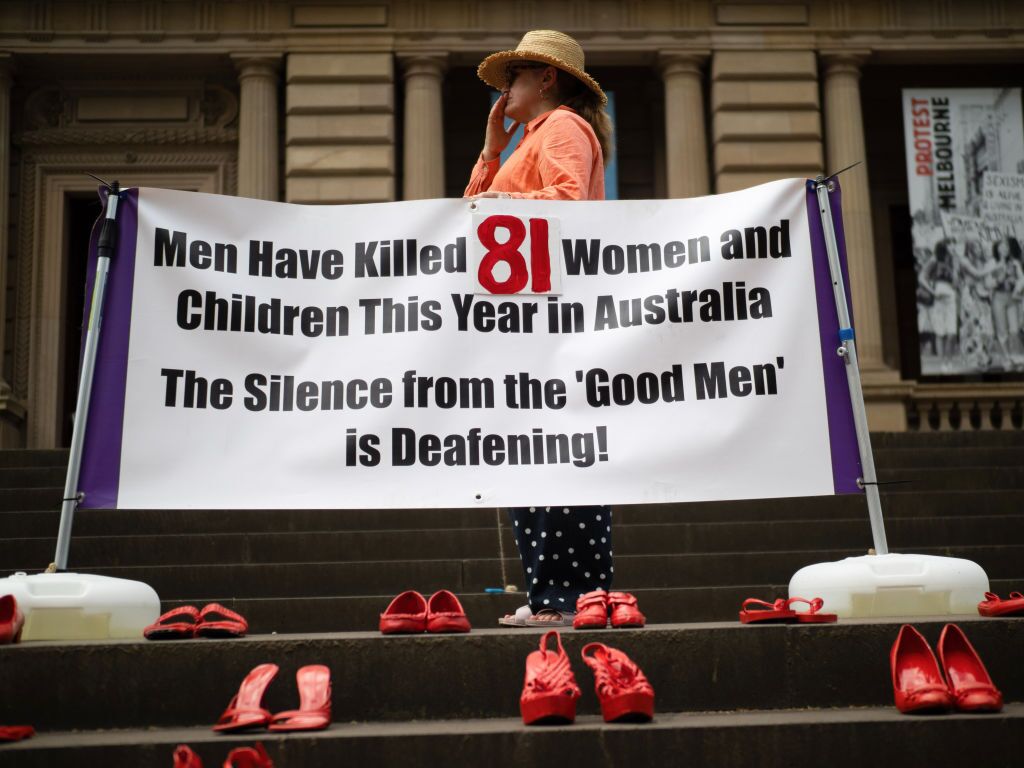 Demonstrators display pairs of red shoes to honor women and children killed in acts of domestic and family violence during a march demanding an end to gender-based violence in Melbourne, Australia, on Nov. 22, 2024. (Alex Zucco / SOPA Images / LightRocket via Getty Images)
Ending Violence Before It Starts
Stopping domestic violence requires more than responding after harm occurs—it requires confronting the gender norms that make violence seem acceptable in the first place.
First, early childhood prevention is crucial, as it helps children develop emotional literacy, conflict resolution skills and an understanding of consent from a young age. Boys, in particular, must be given permission to experience fear, sadness and vulnerability without shame. Teaching that masculinity can include empathy, accountability and care disrupts the pathway from emotional suppression to aggression.
Equimundo, a nonprofit focused on engaging men and boys in gender equality, promotes what it calls “healthy boyhoods” by helping young people develop empathy, emotional literacy and equitable understandings of masculinity. Its initiatives—including Program H (Manhood 2.0) and the Global Boyhood Initiative—work with boys, young men and the adults in their lives to prevent violence before it begins.
Second, we must expand support for those who witness domestic violence. Witnesses, including children, are often overlooked in interventions, despite experiencing significant psychological harm. Access to counseling, culturally responsive and trauma-informed care, and safe spaces, such as support groups, can help survivors heal and disrupt intergenerational cycles of violence. When witnesses are left unsupported, abuse can become normalized or replicated in future relationships, not out of malice, but out of familiarity.
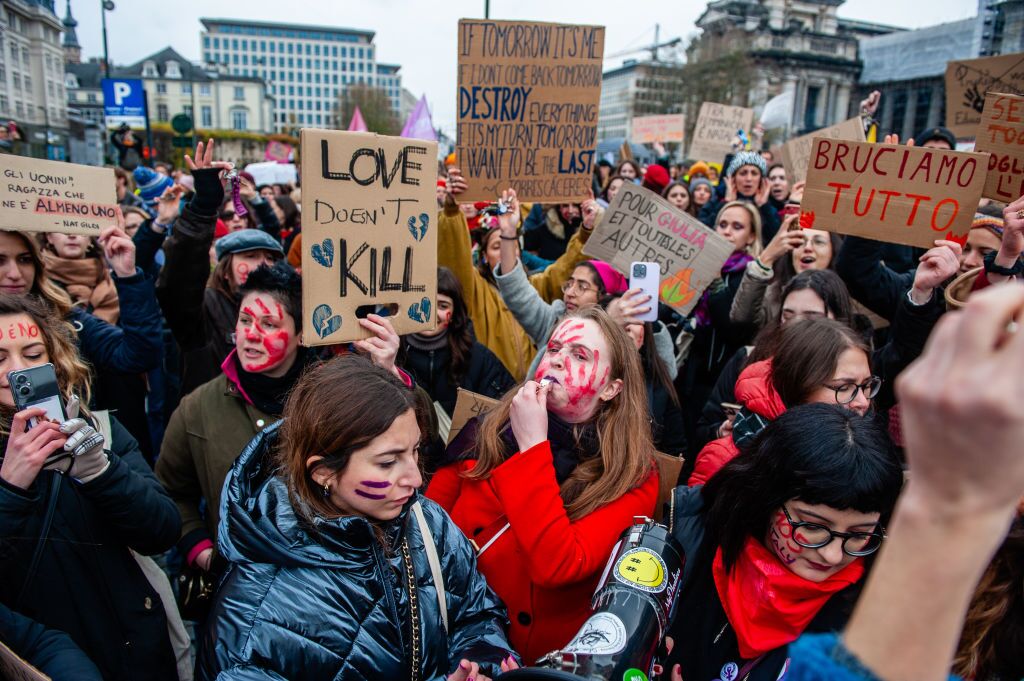 Demonstrators gather to mark the International Day for the Elimination of Violence Against Women during a march calling for an end to gender-based violence in Brussels, Belgium, on Nov. 26, 2023. (Romy Arroyo Fernandez / NurPhoto via Getty Images)
Third, accountability must be reframed. Addressing toxic masculinity means rejecting narratives that excuse violence, such as “boys will be boys.” Effective interventions for perpetrators should center responsibility, behavior change, and the unlearning of harmful beliefs about gender and power. Programs that emphasize accountability without dehumanization—while prioritizing survivor safety—are more effective than punishment alone.
Finally, communities must be empowered to intervene. Perpetrators often hide or deny abuse to protect their reputation. As a result, violence often remains invisible to a victim’s neighbors, family members, coworkers and friends. Bystander intervention training, community education and clear reporting pathways can transform silence into action. Challenging violent masculinity is not solely an individual task; it is a collective responsibility to refuse complicity in harm.
Witnessing domestic violence taught me that violence is rarely just about anger—it is about power, fear and the stories we tell ourselves about what it means to be a man. Harmful ideals of masculinity harm not only those directly abused, but also the emotional landscape of everyone involved.
Addressing it requires courage, honesty and a willingness to imagine masculinity differently—not as dominance, but as accountability; not as silence, but as emotional truth; and not as control, but as the capacity to choose care over harm.
Cody Thompson is a public health advocate, policy researcher, and writer working to transform how we talk about masculinity, addiction, and gender-based violence. Drawing on his lived experience in recovery and as a gay man, he challenges the harmful systems and cultural narratives that isolate men while fueling violence, stigma, and inequity. He has conducted research on domestic violence, HIV prevention, and addiction policy.
Reproduced with permission from Ms Magazine, July 28 2026.